|
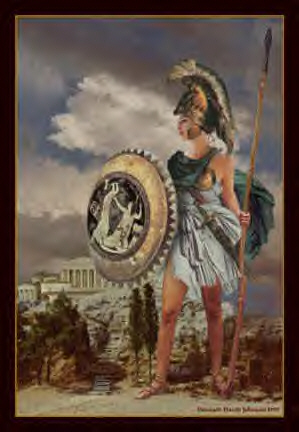
In this lesson we're going to cover a topic which is a subject of debate brought to our attention from time to time. Does the Bible prohibit women from wearing slacks, jeans, or pants? Although there are admittedly issues of greater concern to the survival of Christian civilization, some preachers place this subject above many others in order of importance. Regardless of how the fundamentalists frown upon it, the Bible does not prohibit women from wearing pants. They have flat out misread the Bible verse most often used to assert this position. (discussed herein shortly) Surely the Scriptures teach that a man is not to be effeminate, and that a woman is to be submissive to her husband if he is following Yahweh, but it does not teach that it is somehow "unchristian" for a woman to wear woman's slacks. Almost without exception there is a noticeable design difference between women's pants and men's pants. Common knowledge of this is evident because no preacher who holds to the position that women are not allowed to wear pants, would himself dress in woman's slacks/pants even though he teaches that ALL pants are masculine. Just let him wear a pair of the latest Armani lilac woman's slacks with 10" flares to church one Sunday and observe the looks from the congregation. Even if one may argue that some men's and woman's pants look relatively the same today, that still is not the issue from a Biblical perspective. Here's why: The Bible verse used to "prove" that women should not wear pants is Deuteronomy 22:5. "The woman shall not wear that which pertaineth unto a man, neither shall a man put on a woman's garment: for all that do so are abomination unto Yahweh thy God." However this verse is not referring to simply wearing pants. In the Old Testament Hebrew text, Deuteronomy 22:5 is a comment relating to religious idolatry where several ancient cults practiced transvestite warrior dressing in honor of their pagan god of war. This practice spanned many centuries and we can see a clear example of it with the Greek worship of the goddess ATHENA, also called MINERVA by the pagan Romans. Athena/Minerva was depicted in battle array, and women worshipping her would pay homage by holding ceremonies while dressed in armor, helmets, holding spear and shield. Such feminist cult worship predates even the Israelite period, but there is no consensus on which civilization began it. (Below: Artist's historical painting of the goddess Athena/Minerva dressed in formal male battle gear)
The nations that surrounded ancient Israel were steeped in all manner of pagan religious practices and it took some reminding on the part of Yahweh to make sure His people did not forsake Him and follow after false gods. This was the purpose of Deuteronomy 22:5. The word for "man" in that verse was the Hebrew word "Geber", (Strong's Heb. ref #1397) meaning "man, strong man, warrior emphasizing strength or ability to fight". Strictly speaking, women were being warned in Deuteronomy 22:5 from entering the pagan rites of the Canaanites who at times sought their "gods" by cross dressing in battle gear,which was intended to attract the attention of "the gods". Likewise the Israelite soldier (geber) when entering into other lands was warned not to participate in these same pagan religions which also prescribed that men don women's apparel to summon "the gods". The pagan belief of religious transvestitism is based on the superstition that by combining both male and female into "one being" during a religious ceremony, their ability to commune with their god is doubled in power; .... or that if a woman wants the help of a female deity she would have to become intimate with the goddess by assuming the part of a "male lover", and visa versa for men seeking the aid of a goddess. All this is in no way describes the intent, dress code, or action of a Christian woman putting on a pair of pants to do some gardening work in order to keep a dress from snagging on plants or becoming soiled at the hem. Blue jeans for horseback riding is also not a religious ceremony designed to summon pagan deities. Below is an interesting comment regarding the historical perspective of pagan religious transvestitism: " The pagan religions of ancient Canaan appear to maintain a similar view of spirituality and sexuality. The goddess Anat preserves many of the characteristics of Istar. Like the Syrian goddess Cybele, Anat is headstrong and submits to no one. She is both young and mobile but also a bearded soldier, so many commentators conclude that she is either androgynous or bi-sexual." "The Old Testament gives some indication that Canaanite religion included homosexual androgeny, against which Israel was constantly put on guard" "We do see such an organic connection in ancient religions that persist today....... asexual priest shamans, true hermaphrodites, dressing and behaving like women have a priestly function....... The hijras, who go back into the mists of Hinduism, are a religious community of men who dress and act like women and whose culture centers on the worship of Bahuchara Mata ..." [From Androgeny: The Pagan Sexual Ideal, Peter Jones, pp.449, 454]
Below is a picture of an Indian male Sakhi dressed in female religious attire:
1943 "Vaishnavas, i.e. sadhus who have chosen Rama or Krishna as their deity, are characterized by a strong, sentimental devotion and total self-surrender to one of his earthly 'incarnations' as the god-king Rama or the divine cowherd Krishna. The deity is regarded as a 'person' with whom the devotee can establish an intimate bond, which usually takes the form of a Master-slave relationship. Some sadhus, however, dare to regard him as their Lover, and since the deity is a male, it follows quite logically that they have to play the part of 'mistress' of the Lord. They are designated as sakhis. They imagine having an erotic 'love' relationship with him. Some sakhis even go to the extreme of pretending to have regular sexual intercourse with their Lord -- except on the days when they're having their 'period'." (From Sadhus, Holy Men of India, by Dolf Hartsuiker; picture courtesy Dolf Hartsuiker) Another reason that we could not Biblically condemn the wearing of pants by women for a non religious common occasion is that the word "pants" does not appear in a single Bible verse. One may assume that Deuteronomy 22:5 might be referring to the pants issue if they did not study the original Hebrew text, but even with such an assumption the best one could do would be to hold a position based on a speculation. In Bible days both men and women wore robes. There were no pants worn back then. At that time robes, like pants today, had men and women's styles. However, the word "skirt" DOES appear in the King James Bible, the version used by Fundamentalists to ban women from wearing pants. This word, skirt, is seen in the verses Deut.22:30; 27:20; Ruth 3:9; I Sam.15:27; 24:4; 24:5; 24:11; Ezek.16:8; Hag.2:12; Zec.8:23. In each of these verses it refers to the skirt of a MAN. It stands to reason that if a man preacher is using the King James Version as an "infallible text" without any study of the Hebrew or Greek upon which it is based, then he must be consistent with that English text and wear a skirt only, as the Bible gives no mention of men wearing pants or trousers of any type. The rationale that women should not ever wear pants because it shows their feminine figure is also irrelevant. If women's pants attract the eyes of men because it conforms somewhat to the body, the same may be said of men's pants which conform to a man's muscular frame, from a woman's point of view. Of course we're not speaking of women or men wearing ultra snug and skimpy pants (or tops) which may be considered "sexy", as modesty certainly is a Christian virtue. Women can dress attractively in good taste without dressing to be "sexy", and that includes the wearing of loose slacks or jeans for a social event. It is without Biblical credibility to condemn a woman as being "unchristian" for wearing pants, as it would be to condemn a Scotsman for wearing his kilt. On the other hand, transvestitism for the purpose of dressing to intentionally altar God's separation of the genders is a perversion of His calling a man and woman for separate (not unequal) family and community duties. Therefore Deuteronomy 22:5 must be read within the context of its intent in defining the righteous standards that The Almighty has given us for our benefit.
BACK
|
|
|
|








 (photo); A sakhi, who regards Lord Rama as her Lover.